FREE sourcing support and up to 3% on qualified matching. Eligibility applies to qualified business buyers and is confirmed after we review your product, quantity, destination, and sourcing requirements.
Material applications
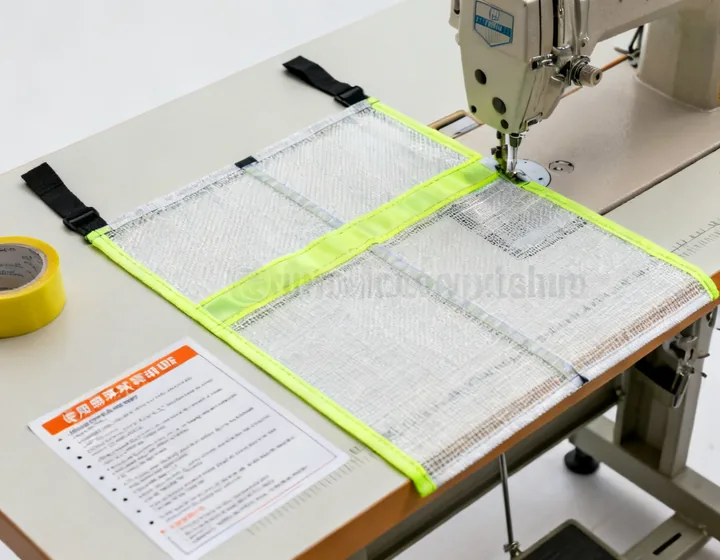
Define the reference that both parties will use. Protective apparel, industrial covers, reinforcement layers and contract interiors impose different exposures. This page does not introduce a new measured keyword; it turns a project use into purchase fields.
State whether the cloth faces flame, chemicals, abrasion, outdoor weather, industrial wash or indoor seating. Record next-to-skin contact, high-wear zones and whether a coating or FR finish is part of the garment or a later process. Keep unknowns visible. A mill name does not describe the exposure.
Name the method family you actually need, such as tensile strength, tear strength, abrasion resistance, pilling, hydrostatic pressure, moisture vapor transmission or colorfastness. Add edition, conditioning, specimen size and the laboratory that will run it. ASTM or AATCC listings are catalogs of methods, not results for the quoted article.
Apparel markers, upholstery panels and industrial covers waste different amounts of edge. Record usable width, roll length, shade-lot policy and whether selvage counts. Finish must match the use: soil-release, coating, backing or untreated greige. Quantity should use the unit you will receive, not a mixed yard-and-kilo guess.
A stock program can shorten sampling when composition, weave, GSM, usable width and finish already fit. Custom development can align construction and finish, but it adds explicit minimums, lab-dip cycles and approval gates. Neither path is universally faster; the brief should state which route the buyer will accept before mills quote.
A family brochure is useful for discovery. It does not identify the quoted article. Bind tensile strength, tear strength, abrasion resistance, hydrostatic pressure and colorfastness to method, edition, specimen condition and laboratory. Supplier ISO 9001 evidence, where requested, is a mill quality-system document, not a credential of this website.
Delivery stages also change the brief. A first article for a plant trial is not a container of bulk rolls. Site constraints at the US destination, such as dock hours, roll-weight limits or indoor storage, belong in the RFQ because they affect packing and freight even when they do not change GSM. Documents that travel with the goods, including fiber-content statements for covered products, should be requested as supplier paperwork rather than assumed from a reference brand.
Adjacent upholstery and drapery inquiries follow the same application logic with different tests. Contract seating cares about abrasion cycles and backing; drapery cares about lightfastness and hanging behavior. Do not copy a protective-workwear method list onto a sofa program. If both families appear in one project, split the RFQ so quotations stay comparable inside each use.
Share intended use, documents you will require, delivery stage and any site constraints at the destination. We will keep application notes with the specification instead of treating them as decoration.
Send a fabric briefQualified business buyers may receive FREE sourcing support and up to 3% on matching coordination after review. Eligibility applies to qualified business buyers and is confirmed after we review your product, quantity, destination, and sourcing requirements.
This is not a lowest-price promise, a fixed discount, or a time-limited offer.