
01 Clarify the brief
Lock composition, construction, GSM, usable width and the milliken textile reference you are starting from, including what may deviate.
FREE sourcing support and up to 3% on qualified matching. Eligibility applies to qualified business buyers and is confirmed after we review your product, quantity, destination, and sourcing requirements.
Independent sourcing partner
Share a retained swatch, GSM target, usable width and US destination so factory quotations can be lined up on one specification. SelvedgeBeacon Procurement is not milliken and does not sell branded inventory.
Send a fabric brief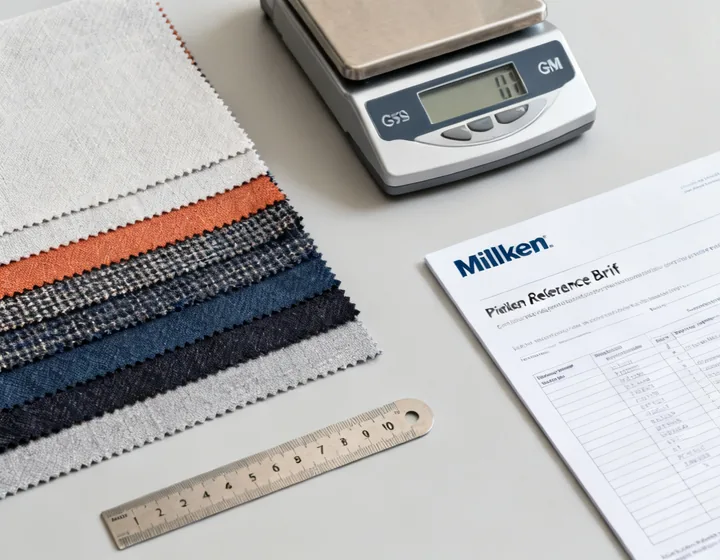
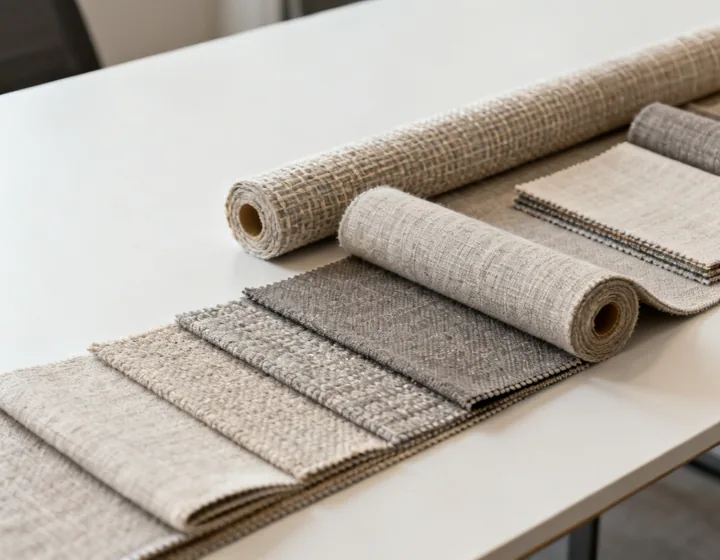
This site coordinates Protective and Industrial Textiles first, with Home Textile and Upholstery Fabrics as adjacent inquiry families. Catalog cards on the products page are generic RFQ configurations, not milliken stock.
A milliken search often starts with a brand name. A comparable RFQ still needs fiber composition, fabric construction, GSM or oz/yd², usable width, warp/weft or courses, shrinkage, colorfastness and the finish that will ship. Leave unknown fields marked open rather than filling them with assumptions.
Do not treat a mill certificate, OEKO-TEX listing or ISO file as a credential of this website. Ask the proposed supplier for a current document tied to the quoted article, issuing body, site and date.
Protective apparel, industrial conversion, contract seating and drapery do not share the same abrasion, tear, hydrostatic or flame-test questions. Record the end use before comparing milliken fabrics or milliken fabric constructions as look-alike options.
| Use | Requirement to clarify |
|---|---|
| Protective workwear and industrial covers | Performance standard, test level, environment and finish |
| Contract upholstery and drapery | Abrasion method, backing, lightfastness and usable width |
| Reinforcement and coated paths | Resin, coating weight and exact article identity |
Lock composition, construction, GSM, usable width and the milliken textile reference you are starting from, including what may deviate.
Line up quotations on the same inclusions: greige versus finished goods, testing, sampling charges, packing and freight to the US destination.
Separate stock swatch, lab dip, strike-off and pre-production sample. None of those automatically represents the bulk dye lot.
Record AQL, roll inspection, shade-lot policy and who holds retained references after shipment.
Prepare the product family, measurable fields, quantity unit, US destination and the sample stage you will accept. Independent supplier matching then uses that brief; it does not imply equivalence to the reference mill.
Compare price only after composition, construction, weight, usable width, finish, quantity, packaging, freight, duties, sampling charges, testing and payment terms share the same basis.
Name the laboratory, method edition, specimen conditioning and whether the buyer, supplier or a third party owns the inspection. A method title is not a result. Public catalogs such as ASTM D5034 (tensile), ASTM D1424 (tear) or AATCC 61 (colorfastness) list methods; they are not article results until a laboratory reports them on the quoted construction.
Stock fabric can reduce sampling time if GSM, usable width and finish already match. Custom development can match weave, coating and shade, but it usually needs written minimums and extra lab-dip or strike-off stages. Compare those constraints on the same grid as unit price rather than treating one route as automatically cheaper.
A written fabric brief keeps supplier offers comparable. SelvedgeBeacon Procurement coordinates factory quotations; it does not promise a lowest price or a fixed saving.
Qualified business buyers may receive FREE sourcing support and up to 3% on matching coordination after review. Eligibility applies to qualified business buyers and is confirmed after we review your product, quantity, destination, and sourcing requirements.
This is not a lowest-price promise, a fixed discount, or a time-limited offer.